Feeds:
Posts
Comments

I had just given one of my Christian writers’ seminars in our nation’s capital. Many of the people who attended made commitments to write God’s answer. Fervently, I prayed for them and myself that we would be faithful to God’s call.

That evening, my hostess took me on a tour of the city. I had been to D.C. several times during the day but never at night. In the moonlight, the buildings were even more magnificent. But I was not an awestruck tourist taking in the sights. Rather, I began to grieve. It was as if God was showing me the heartbeat of my nation, and the heartbeat was weak.

As we left the city an hour later, we drove past the Lincoln Memorial. “Child, not one stone will be left standing on another,” I felt the Lord speak to my heart. Never have I been so aware of His presence, so sure of His voice. I wept for the city and for my nation.

“Are you sure it was the Lord?” people have asked me. “I wish I thought it wasn’t Him,” I’ve replied. Only time will tell. What I do know is that Jesus is coming—perhaps soon, perhaps in my lifetime and yours. And I’m reminded of Jesus’ words before He went to the cross. “As long as it is day, we must do the work of him who sent me. Night is coming, when no one can work” (John 9:4 NIV).

When I wrote this chapter in 1999, millennium fever had even non-Christians believing that history is moving to a climax. So many pieces of the end-times puzzle were falling into place—even more so today thirteen years later. World peace hangs by a slender thread as North Korea threatens to launch missiles, Syria is engaged in a brutal civil war, and Iran continues to threaten to wipe Israel off the map.

Financially our nation is teetering on the brink of collapse. Morally we’re in a free fall. The persecution of Christians is intensifying, and technology now exists for the mark of the beast.

I am not about to set a date for the Lord’s return or pretend to be an eschatologist. Most of Revelation and Daniel remain a mystery to me. I’ve read a couple of end-times novels and really don’t care to read more. The scenario of what may be right around the corner could make for sleepless nights, especially since I don’t know whether the Rapture will be pretribulation, midtribulation, or post tribulation. My gut-level feeling is that God isn’t going to zap us out of the dark days that are coming when the light of Christ’s love will be most desperately needed. But I may be wrong. So may the pre-trib crowd. Again, only God knows.

Even Jesus said, “No one knows the date and hour when the end will be—not even the angels. No, nor even God’s Son. Only the Father knows” (Matt. 24:36 TLB).

So what do we know in these days of uncertainty? Where do we find security if the nest egg we may have been able to accumulate was wiped out in the recession or a prolonged period of unemployment? How do we let our light shine in the encroaching darkness?

“Be prepared, for you don’t know what day your Lord is coming” (Matt. 24:42 TLB). Just as no one expected (at least I certainly didn’t) that the USSR would collapse or the Berlin Wall crumble, the Lord’s coming will be just as unexpected. “The world will be at ease—banquets and parties and weddings—just as it was in Noah’s time before the sudden coming of the flood; people wouldn’t believe what was going to happen until the flood actually arrived and took them all away. So shall my coming be,” Jesus said (Matt. 24:37-39 TLB). We need to live in a state of expectancy rather than allow ourselves to be lulled into complacency or a business-as-usual, laid-back approach to the work of ministry.  

“Stay true to the Lord,” the apostle Paul wrote from a Roman prison (Phil. 4:1 TLB). If we are to proclaim truth to our dying world, it is critically important that we understand what truth is. More than ever before, we need to be grounded in His Word, so if it were to be taken from us, it would, indeed, be buried deep in our hearts. Not only do we need to know the truth, we need to be committed to the truth, regardless the price tag. Now is not the time to compromise, not the time to bow the knee to any other god than the Lord Jesus Christ. No matter how harmless it may seem to “bend just a little” so as not to offend, not to be seen as a fanatic, we must never forget that Jesus said, “I am the Way—yes, and the Truth and the Life. No one can get to the Father except by means of me” (John 14:6 TLB).     

Let not your heart be troubled,” Jesus said. “You are trusting God, now trust in me” (John 14:1 TLB). Even though the world as we have known it may seem to be spinning out of control, we need to remember that none of what is happening is taking God by surprise. He is still in control! He is “the Alpha and the Omega, the Beginning and the End” (Rev. 21:6 NIV). And despite the turmoil around us, He promises the gift of peace of mind and heart (see John 14:27). We do not need to fear nor be consumed by worry. He has promised not to abandon us or leave us as “orphans in the storm” (John 14:18).

Yes, the future seems frightening. The unknown strikes fear in many people. But as Christians, we do not need to get caught up in dire doomsday predictions. We know how it all ends! “Hallelujah! Salvation and glory and power belong to our God” (Rev. 19:1 NIV). We can and must “hold unswervingly to the hope we profess, for he who promised is faithful” (Heb. 10:23 NIV). In His strength, and through His power, we can lay aside all of our self-doubts and feelings of inadequacy and boldly “write His answer.”

Responding to God’s Call to Write

Read the letters to the seven churches in Revelation 2 and 3, asking the Lord to speak to you and strengthen you for the work He is calling you to do.

_____________
Excerpted from Write His Answer—A Bible Study for Christian Writers by Marlene Bagnull.  Phoenix, AZ: ACW Press, 1999. © 1999 Marlene Bagnull. Click here to order an autographed copy at a discount.

eagle

https://www.facebook.com/TheJesusWalkers

I knew God had called me to write a book. What I didn’t know was if I could do it. As my friend, Gayle Roper, once said, “There’s a big difference between a book and a magazine article – like 250 pages difference.”

To be honest, there were days the last thing I wanted to do was work on the book. The evil one’s lies grew louder and more insistent. “What makes you think anyone would want to read what you’ve written?” My self-doubts intensified. I wanted to run from what I still knew God was calling me to do.

“He who believes need never run away again,” I read in Isaiah 28:16 (TLB).

Exactly 365 days after I had committed to finish the book in a year, I completed the manuscript. And then the waiting began. Some of you know that the manuscript was rejected by 42 publishers over a five year period. Finally, the 43rd editor to see the manuscript accepted it for publication.

Looking back I’m amazed that I didn’t give up. I certainly wanted to give up. But God wouldn’t let me, and I’m so glad I didn’t. Had I given up, eight other books would never have been published. I wouldn’t have known the joy of serving on the faculty of over 70 Christian writers’ conferences and giving my one and two day writing seminars over 50 times around the nation. The Greater Philly Christian Writers Conference would not have been birthed 30 years ago, and the awesome privilege of directing the Colorado Christian Writers Conference for 17 years would never have happened.

What about you? Is God calling you to write an article or story, a book or even a screenplay? Does it seem impossible? Do you feel you lack the writing skills to make it happen? Are you stuck and the words aren’t flowing? Do you have a completed manuscript that you’ve not been able to sell? Are you discouraged and ready to run from God’s call?

I know the Colorado or Greater Philly Christian Writers Conference can be a turning point for you and your writing ministry. It’s not too late to register for the May 15-18 Colorado conference and to schedule one-on-one appointments with FOUR editors, agents, or authors if you attend Thursday through Saturday. Secure online registration for the July 31 – August 3 Greater Philly conference will open April 15.

Trust Father to make a way –

  • Logistically – Friends babysat my three children so I could attend the St. Davids Christian Writers Conference for a number of years.
  • Financially – We often “have not because we ask not.” I want to encourage you to approach your church family and your friends if you need help. They may welcome the opportunity to invest in your writing ministry. My pastor paid for my first writers conference and provided the accountability I needed afterwards to not waste what he invested in me. The conferences do not have any full scholarships to offer this year, but partial scholarships up to 50% of the cost of registration are possible. The scholarship application is not yet posted for the Philly conference. For Colorado’s application click here. Time payments can be arranged if necessary.

Lord, I believe. Please help my unbelief. Help me to have faith in You knowing that You can make all things possible.

Dina SleimanDonna Brennan
Interviews
CCWC & GPCW
Faculty Member
Dina Sleiman

Author Dina Sleiman writes with the same flowing grace one could find in a song or a dance. If you’ve read her books, you wouldn’t be surprised to learn that she’s also a poet, a songwriter, and a worship dance choreographer, director, and dancer. Her novels, poetry, songs, and dancing all can be considered forms of worship.

Dina will be teaching a continuing session at the May 15 – 18 Colorado Christian Writers Conference on “The Inspiration and the Perspiration.” This course is designed to help Christian writers seek God for writing inspiration and also learn the skills needed to craft that inspiration into a fully publishable book. I got in touch with Dina to ask her a few questions about the session.

Q: How would you define Christian writing? Is being a “Christian writer” different from being a “Christian who writes”?

I have my own definition for Christian writing: “Any writing inspired by the Holy Spirit that advances the kingdom of God on earth.” I will explain why that is my definition, and we will discuss other definitions and examples of classic Christian writing as well. This is always an interesting topic, and I love to hear feedback from my students. I do think being a Christian writer can be different than being a Christian who writes, although that is a fairly subjective distinction.

Q: As a Christian I feel I should already know how to hear from God, but I admit sometimes I only hear silence. Will you be showing us methods for communicating with God so we can hear his voice? Will these methods help us only with our writing or with other issues in our lives as well?

I think every Christian wants to believe they can hear God’s voice, but the majority of us suffer a good bit of confusion in this area. This was a huge struggle for me throughout much of my life. A wonderful Christian brother told me recently that he tossed a coin to try to discern God’s voice. That’s just sad. We have the Holy Spirit dwelling in us and should not have to resort to those sorts of Old Testament methods. Although I do not buy into overly simplified formulas, I have learned a number of techniques during my own quest that really help me to hone in on and hear God’s voice, and yes, I will be sharing all of these. In class we will be focusing on how to use these techniques for writing, but they will absolutely bless you in every area of your life. I remember one student receiving a powerful word from God during our in class prayer time that had nothing to do with writing at all, and it truly changed her.

Q: How can we tell if our inspiration comes from God or from or own imagination?

Again, I have a number of tips to share in this area, including checks and balances. But the most basic answer is that the Spirit of God is often referred to as a flowing river, so you want to tap into that sense of flow that comes from the kingdom of God deep within you.

Q: So once we get that inspiration—that lump of clay—now what?

Now the real work starts. LOL. Even the biblical writers spent extensive time crafting their writing into the best of ancient poetry. We’ll look at examples of how this worked with a number of poets and prophets.

Q: If our inspiration comes from God, that’s all we need, right? Why would we need to learn the writing craft—wouldn’t God just give us all the words, too?

I won’t deny that it is possible for God to give us precise words that are correct the first time, or to teach us to write through practice and adherence to his voice, but this is the rare exception rather than the rule, even among biblical writers. Habakkuk is the only real example of this. Of course, the deeper we can tap into the flow of the Holy Spirit, the better our writing will be the first time. But that is no excuse to be lazy or stubborn about revising and editing.

Q: Will the class be more about inspiration and hearing from God, or more about the perspiration and crafting we need to do to shape that lump of clay idea into a publishable book?

We will spend the first few hours learning about inspiration and transitioning to perspiration. The remainder of the class will be about the hard work needed to create that publishable book and all the steps of editing involved. I’ve actually considered calling the class “The Inspiration, The Perspiration, and The Commercialization” but I didn’t know how that would strike people. We will spend the last hour or so discussing the business side of writing, though, because it’s very important if you want anyone to read the message you’ve put so much work into.

Q: What are some of the crafting topics you’ll cover?

We will look at all the steps of editing that publishing houses use and learn to apply these to our own work. I will try to tailor the class to the genres of writing represented in the group. But in general we will look at a plan to start with major content editing and work through the process until every letter and punctuation mark is in place. Generally I end up teaching about plot, scene structure, and characterization for fiction and essay structure for nonfiction. Sometimes I get to teach a little about poetry and lyric essay as well, depending on my audience. Fortunately, my background covers all of these areas. I think my class is a great one for new writers who want to see the full process involved in writing a book, and also for writers who are having difficulties, but can’t seem to pinpoint why.

Q: Would strategic planning include outlines and plot summaries? What about for folks who call themselves pantsters?

By strategic planning, I primarily mean that you should pin down your genre, audience, and premise before you get too far into your writing. And I will explain why these are important. Beyond that, I believe that the writing process works differently for different writers. In basic nonfiction, it would be difficult to write without a plan. In fiction and narrative nonfiction, some writers plan the whole plot in advance. Some must experience the entire story along with their characters without much forethought. Many writers fall somewhere in between, using free writing to get them started before planning. But in order to have a strong story, at some point you must examine the structure. Every story must have the same basic “bones” as Angela Hunt puts it. And we will discuss those bones. For pantsters, this might mean extra editing once the first draft is finished.

Q: As acquisitions editor for WhiteFire Publishing, you’ll be taking appointments at both the May 15-18 Colorado and July 31-Augut 3 Greater Philly Christian Writers Conference. Is there any advice you care to share with folks planning to pitch to you?

I just want to get to know you as a person. What you write of course, but also your personality, passions, hopes, and dreams. I love a relaxed session with a lot of give and take. Don’t worry about preparing a long speech. A thirty second pitch is more than enough. And please, please, listen when I ask you questions—and answer them! Don’t just return to your script. You don’t have to sell me on anything. I just want to see if we’re a match. I rarely read sample writing during an appointment. I prefer to do that later via email. But I do appreciate if the author gives me a one sheet with their picture to help me remember them and our conversation.
_______ 
 

Thanks Dina and Donna. Great questions and responses. “The Inspiration and the Perspiration” is going to be an exciting continuing session.

Megan Breedlove
Donna Brennan
Interviews
CCWC Faculty Member
Megan Breedlove

As authors we’re told we need a web presence, so we learn how to create a blog or a webpage. But how do we get people to visit our website? And if we do manage to get them there, how do we get them to stay or come back?

Well, if you’re attending the May 15-18 Colorado Christian Writers Conference, you can find out by taking the “Get Them Coming to Your Blog/Website” clinic with Megan Breedlove. Megan’s website, www.ManaForMoms.com, consistently ranks in one of the tops spots on Google for her keywords.

I got in touch with Megan and asked her about her website and about the clinic she’ll be teaching.

Question: Who should attend your clinic or make appointments with you?  Do we have to be technology experts? 

 Anyone who has a website up and running should attend. You absolutely do not have to be a technology expert. (If you are, that’s okay, too!) This clinic will be taught at a level that’s easily accessible by anyone, yet upper-level enough for those who may be more technologically inclined. All you need is a website and a desire to improve it.

Question: We’ve all heard of “keywords” and “Search Engine Optimization” (SEO), but many of us don’t know much about these topics or the best way to use them. Will you explain these terms to us in a way that makes sense? More importantly, will you help us apply SEO to our own websites to improve our ranking in search engines like Google? 

That’s exactly the point of the clinic: learning what you need to know so that you can increase your Google ranking. You don’t have to know a lot about technology before the clinic; I’ll teach you. You just have to be willing to learn and work hard.

Question: What’s the first thing we need to do, before we try to come up with any keywords or other optimization strategies? 

It sounds simple, but you have to know what your website is about. Sometimes, in an attempt to attract as many readers as possible, people will try to include too many things on their website. This leads to an unfocused, scattershot approach, and your potential readers won’t know what you’re about. So figure out the one thing you’re about. If you can’t tell me what you’re about in 10 words or fewer, you’re not focused enough.

Question: Will you show us how to select good keywords to use for our target audience? Can you give us any advice now? 

We will definitely talk about that. One thing that’s huge in figuring out the keywords you need is to figure out what “felt need” the person who comes to your website will have. What need will a random stranger in Rhode Island have, and what will he or she sit down and type into a search engine as a result of that need? Those are the keywords you need on your site.

 Question: Will you share with us other optimization strategies? Is there a checklist of do’s and don’ts? 

 I’ll share tons of strategies, tailored to your individual site. You can make them into a checklist if that is helpful. You’ll learn more than you ever thought there was to know about optimizing your site for your target audience.

Question: Okay, now that we’ve drawn people to our site, how do we keep them there long enough that we don’t have a high bounce rate? Do we provide the content right up front? Do we make them search for what they want? Do we entice them to click on internal links? (Doesn’t our search engine ranking go up if people click on those internal links?) 

The short answer to these questions is that you have to interest people in your site within about the first three seconds after they see it.  We’ll talk about ways to do that–both general ways and ways that are particularly relevant to each person’s site.

Question: If we have other sites linking to us, does that help our Google ranking? Does it matter how big or highly ranked those sites are? Does linking to other sites affect our own ranking?

Yes, yes, and yes.  Absolutely!  The more and bigger, the better!

Question: What about twitter and Facebook? Will you be sharing how to use these and/or other social media to drive traffic to our website?

Definitely. As well as working on each person’s website, we’ll talk about other sites you can use to help yours.

Question: Will you show us how to check the effectiveness of our optimization strategies? Can we get this information all in one place or do we have to use various ways and different locations?

There are several ways to check, but we’ll talk about one primary way which is extremely helpful–vital, in fact.

Question: On your own site, Manna for Moms, you provide wonderful devotionals based on your experience as a mom. I see you add new devotions fairly regularly. Is there a rule for how often we should update our content?

The minimum is once per week. It’s better if you can do it more often.

Question: I noticed that your speaking topics, your website devotions, and your books are all very interrelated—they’re all designed to encourage moms and draw them into a closer relationship with God. It’s obvious that’s something near and dear to your heart. But I get the sense you are also passionate about helping other writers get the most out of their websites so they can promote their books and their ministries. Can we expect a book on SEO or website enhancement from you in the near or distant future? 

Probably not.  At this point, I need to focus primarily on my family (I am married and have 5 young children), then secondarily on my website, books, speaking ministry, etc. 

Thank you, Megan. And I look forward to meeting you in Colorado.

Thanks! And thanks for the great questions. I look forward to meeting you too!
________________ 

 Megan’s clinic is limited to 10 participants. Click here for more info and the application that needs to be completed by April 16.

SuzyQDonna Brennan Interviews
Suzanne & Shawn Kuhn

Part 2


Suzanne Kuhn is owner of SuzyQ, a full-service author promotion and retail development firm. Together with her husband, Shawn, Suzanne works with authors, publishers, and retailers, helping to coordinate events, train staff and authors in reader engagement, and develop promotions for increased sales and reader/customer loyalty.

Both Suzanne and Shawn will be available at the Colorado Christian Writers Conference May 15-18 and at the Greater Philadelphia Christian Writers Conference July 31 – August 3.  Suzanne will be teaching three sessions on various ways to promote your books and yourself, including running successful in-person events as well as connecting through social media outlets. Both Suzanne and Shawn will be available for appointments.

Your workshop, “Putting the Social Back in Social Media,” focuses on making a true connection with the person on the other end. Hopefully we all know not to come on too strong trying to promote our books or risk being unfriended or unfollowed. Will you show us ways to promote ourselves and our books without being overbearing?

Yes, we will talk about using social media for engaging influencers, readers and potential readers. We’ll also discuss ways to make social media manageable and a great tool for expanding your audience.

As authors are engaging what are some unexpected benefits we might find if we handle this social media thing well?

Your followers will be talking about your books.  And we all know word of mouth advertising is some of the very best advertising there is.  We have had clients who have received radio interviews, speaking engagements, and one even signed a traditional publishing contract all because of well planned and executed social media.

What do you mean by value-added content?

Value-added content is simply offering information beyond just your limited author and or book interests.  I will give specific ideas and even offer a Q&A opportunity to those who attend this workshop to brainstorm specifically what their value-added content could be. This is also a great topic to brainstorm in an appointment with Suzanne or Shawn.

Is it worth an author’s time to do in-person promotions when you can reach so many people at once via social media?

Would you prefer to be texted goodnight or kissed goodnight? Meaningful interaction takes place with live events. Readers leave the event feeling as if they’ve gotten to know you. Upon returning home, these now reader friends will then engage with social media. Social Media is the add-on or follow up to a strong live event.

In your “Engaging Events” workshop, will you focus primarily on book signings?

We will touch on many types of events.

What other types of events will you cover?

We will address book clubs, reader days, and book launches, just to name a few. Any topics not specifically discussed could be answered in the Q&A or through appointments.

Will you introduce us to some unique ideas for Author Events?

Our ideas may or may not be new, but the execution we suggest certainly will be unique.

Can a face-to-face meeting really influence the staff of a bookstore to promote our books after the event is over?

Absolutely! Live interaction can make or break an author’s sales in a bookstore. In the Events workshop, we will share a real experience that happened in a bookstore and how it directly affected that author’s sales.

Suzanne, you have over 20 years of experience in book retailing and event planning, and Shawn you were part-owner and VP of a regional bargain book chain for over 25 years. So I’m expecting your Retailers Request workshop to provide lots of ways to develop a good relationship with bookstores, which can result in increased sales. Can you give us a few tips now?

Books are still being discovered in bookstores.  It is so important for an author to nurture those relationships in a way that best suits the bookstore.  My best tip is you don’t want to miss this workshop. You will gain valuable insider information.

Will either of you be available for individual appointments at the conference? What types of help can authors expect to get out of these appointments?

We will both be available for appointments, meals, and after hour chats. We can talk about any aspect of an author’s book promotion plans, branding, social media, events and connecting with bookstores, or anything else promotion related. We love these appointments. We get to spend 15 minutes with an author, catching their vision then helping them to come up with ideas that are authentic to them as an individual.

___________________

Thanks much, Donna, Suzanne, and Shawn. I’m looking forward to seeing all of you in Colorado and Philly.

Choices

cross

Choices

Arrested in the Garden of Gethsemane,
   You could have called on heaven’s armies;
      instead You allowed them to take You captive.

Falsely accused in a mockery of a trial,
   You could have denied who You were;
      instead You chose to convict Yourself.

 Physically and emotionally abused,
   You could have struck down Your tormenters;
      but You chose to remain silent and endure the pain.

On the way to the cross,
   You could have thought only of yourself;
      instead You spoke with compassion
         to Jerusalem’s daughters.

Nailed to the cross and spit upon by the crowd,
   You could have cursed Your enemies;
      instead You prayed, “Father, forgive them.”

Taunted to “Come down from the cross!”
   You could have done exactly that;
      instead You chose to suffer and die
         that I might have the choice to live in You!

                                                            ~ Marlene Bagnull
                                                    First published in Face-to-Face
                                                                                                    Spring 1984

Suzanne Kuhn Jan 2013Shawn KuhnDonna Brennan Interviews

CCWC & GPCWC
Faculty Members
Suzanne & Shawn Kuhn

Part 1

To be successful authors in today’s publishing world, we need to learn ways to promote our books. Understanding more about how bookstores operate could also be mighty helpful. But where can we go to find this information in a usable and helpful format?

One good source for this knowledge is Suzanne Kuhn, owner of SuzyQ, a full-service author promotion and retail development firm. Together with her husband, Shawn, Suzanne works with authors, publishers, and retailers, helping to coordinate events, train staff and authors in reader engagement, and develop promotions for increased sales and reader/customer loyalty.

Both Suzanne and Shawn will be available at the Colorado Christian Writers Conference May 15-18 and at the Greater Philadelphia Christian Writers Conference July 31 – August 3.  Suzanne will be teaching three sessions on various ways to promote your books and yourself, including running successful in-person events as well as connecting through social media outlets.

I got in touch with Suzanne and Shawn to ask a few questions about SuzyQ and the sessions they’ll be teaching.

It’s obvious why self-published authors may need help in promoting their books. But do authors going through the traditional publishing process also need to do this? Isn’t promoting our books the job of the publishing house?

In today’s industry, every author must promote their own book. For a traditionally published author, it is more like a partnership with their publisher, each is doing their part to actively promote the book.

Your workshops and your company, SuzyQ, focus on promotion. Is that the same thing as publicity?

Promotion is definitely different from publicity or public relations for that matter. We focus on connecting our authors with their specific target audience. The best way to describe author promotion is to say if there is a two-lane road, one lane publicity and the other PR, we (SuzyQ) have created our own lane and are driving up the double yellow line. We may do some things that cross over into what you would think of when you think of traditional publicity or PR, but for us the focus is much more on virtual or live engagement, whether it be with readers or influencers. [Join Suzanne in her workshop to get her definition of who your influencers are. You may be surprised at who she defines as your influencers.]

Do you show up and participate at events for your clients?

 Yes, we do. Actually, when Suzanne first founded SuzyQ that was the vision for the company, to assist authors with live events. However, as SuzyQ has expanded, so have our services. At this point, Suzanne’s focus is still on live events with authors and retailers, while Shawn focuses on social media and other support.

What’s the benefit of having SuzyQ at a live event?

We coach our authors for live events, so authors are well prepared to make the most of any situation. However, when one of our team is on location, we add value to those interactions. WE are the ones promoting the author, making conversation and guiding the experience. We are the authors’ gatekeepers, we control line flow, take pictures, deal with any “difficult” fans, help to channel excited fans, and we create our own buzz.

Will either of you be available for individual appointments at the conference? What types of help can authors expect to get out of these appointments?   

We will both be available for appointments, meals, and after hour chats. We can talk about any aspect of an author’s book promotion plans, branding, social media, events and connecting with bookstores, or anything else promotion related. We love these appointments. We get to spend 15 minutes with an author, catching their vision then helping them to come up with ideas that are authentic to them as an individual.

_________________

Thanks Donna, Suzanne, and Shawn. Be watching for part 2 of the interview that focuses on social media and engaging events. And take advantage of Suzanne and Shawn’s expertise by requesting an appointment with them at the conference.

Kaylie Hathaway

Interview with Teen Author
Kaylie Hathaway

by
Megan Breedlove

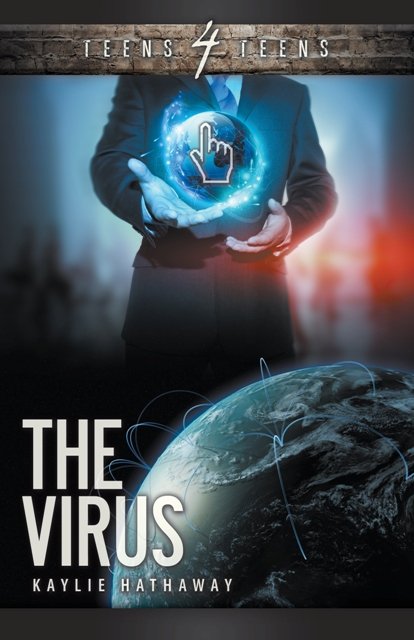
Kaylie Hathaway is the 16-year-old author of Beautiful Disorder and The Virus. She began attending the CCWC in 2011, where she received the Most Promising Teen award. In 2012 at the CCWC, OakTara acquired her books, and they were recently published. They are available through Kaylie’s website at KaylieHathaway.com.


BeautifulDisorderThe VirusOak2In this interview, Kaylie discusses her writing career and offers some advice to other aspiring writers.

Q: Tell us when you started writing and how you came to publish two books at only 16 years old.

I started writing when I was around 10 years old because I read a Nancy Drew book, and it really inspired me to want to become an author. So I started writing, and then you told me about the conference, and I was able to go. I had a 15-minute appointment with an editor, and that editor read the first chapter of my novel and told me I should talk with Ramona from OakTara Publishing. I did, and Ramona liked my writing, and the rest is history.

Q: What is unique about your books?

I think that they take a different perspective being written by a teen, for teens. They really express how teens feel, because I am a teen right now. But they also make a good point without being preachy.

Q: I’ve read your first book, and your characters are pretty realistic. How do you make them so believable?

I just try to think about what they would do in certain situations. I give them personalities, and I let them become like people that I know in certain ways, and unlike people that I know in other ways. And I give them their own distinct personalities in that sense.

Q: How do you know what to include in your stories?

For the first draft, I just write whatever comes to my mind, whether it’s good or bad, or whether it makes sense or doesn’t make sense, whether it goes along with the story or not. Then for the second draft, I go through and take out everything that just doesn’t work. I have to cut out a whole lot of stuff most of the time. Sometimes none of it works, but you just have to keep cutting it out and adding new stuff in to make it all flow right.

Q: What is your goal in writing?

One reason I write is to tell people stories and to encourage people, especially teen girls, that they can follow their dreams. Another reason is I also want them to know that reading can be fun and beneficial. My main reason is to point everyone I possibly can to Jesus Christ. My goal is to honor God with my writing.

Q: What advice would you give to someone who wonders whether he or she has what it takes to be a writer?

I would say to get out there and meet people, make contacts, and just keep writing. Never stop writing. Ever. Always read, too. Read and write.

Q: What do you think is the best way to learn your craft as a fiction writer?

To read. To read all the time, and to listen to all the advice that other authors give. Even if the advice maybe doesn’t apply to your genre, you still want to listen to it and take it all in and apply it the best you can.

Q: Do you want to pursue writing as a full-time career?

I want to go into the editing world at some point in time. But no matter what I’m doing, I’ll still be writing. I don’t think I’ll ever stop writing books.
_____________

Kaylie is already registered for the May 15-18 Colorado Christian Writers Conference. She’ll be part of our author’s panel at the Thursday evening general session, “Write His Answer – And Give God the Glory!” She’ll also serve on the “Working with Editors” panel during Saturday’s Teens Write. I’m very proud of Kaylie and was delighted to give her book the following endorsement:

Kaylie Hathaway takes readers into the life of a teenage girl who has been convicted of a crime she did not commit. Sentenced to community service, Lux Richardson struggles with anger and unforgiveness. Beautiful Disorder is a page-turning novel for teens written by a teen. ~ Marlene Bagnull, CCWC Director

Image
Donna Brennan interviews
GPCWC faculty member
Tim Shoemaker

Is your writing strong enough the catch the attention of your intended reader? How can you avoid those weak beginnings, sagging middles, and limping endings? What are some ways to build up the plot, invigorate your characters, and create powerful scenes?

The answers to these and other questions can be found at the July 31 – August 3 Greater Philly Christian Writers Conference when Tim Shoemaker teaches the continuing session, Take Your Fiction to the Gym. During the course of this six-hour session, Tim will provide you with tips and techniques to strengthen your writing so it can compete in the real world of publishing.

I asked Tim some questions about this continuing session, and about his 2012 Zonderkidz novel, Code of Silence. (NOTE: The second book in the series, Back Before Dark, was released this month.) 

Question: You’re known for packing a lot of info and fun into your classes. You also have a reputation for using a lot of props to make your point. You’re not going to bring real gym equipment and make us do exercises are you?

Nope. But I’ll show you how to take your manuscript to the gym. And you won’t even have to get out of your chair to do it.

Question: How would you define “strong writing?”

Strong writing grips the reader and won’t let them go. Strong writing pulls the reader into the story and keeps them up at night thinking about it. Strong writing makes the reader laugh. Cry. Think. Strong writing raises an editor’s eyebrows-in a good way.

Question: Very often beginner and middle-level writers hear the adage “Show, don’t tell.” Are you going to tell us how to do this?

No. I’m not going to TELL you how to do it. I’m going to SHOW you how. We’ll spend plenty of time on this topic so that those attending get it . . . and their writing will improve immediately.

Question: If we’re not writing a suspense or thriller novel, do we still need conflict in our story?

Quick answer? Yes.

Conflict keeps the reader interested. It adds tension. It creates questions as to how things are going to work out for the characters in your story. There are four basic types of conflict-and good fiction probably has some form of conflict on every page.

Question: When we create dialogue, shouldn’t we just write it like we hear people speak it? Doesn’t that make it more realistic?

We want to create the illusion that our dialogue is just like the way we hear people speak-but good fiction dialogue is different. Real conversations are loaded with all sorts of boring elements. Good fiction dialogue cuts out all the boring parts. And that makes it stronger. Way stronger.

We’ll take a good look at how to write stronger dialogue-and to keep it sounding realistic at the same time.

Question: Should our fiction contain a life-message or lesson? Is that more important in Christian fiction than in general fiction?

Yes. Our fiction should contain a life-message or lesson-whether it is Christian or general fiction. It can be subtle-but it must be there. It is often a question that the story seems to ask. In my book, Code of Silence, the question has to do with honesty. Is there ever a time to lie? What should I do if it is easier, or better for me if I didn’t tell the truth?

Sometimes we don’t fully realize what that message is until we’re far into writing the book. Often our protagonist, our main character, has a very obvious goal. But there is a deeper need that eventually surfaces. Often our life-message is found there.

The message in Christian fiction certainly has all the potential to be incredibly important and life-changing. And that’s exactly what it should do. That may or may not be the case with general fiction.

Question: Code of Silence seems to have a guy-focus, but it works for girls. It also works for adults. Is it harder to write for boys than for girls? Why do you think Code of Silence has such a broad appeal?

I’m not sure if writing for boys is harder than writing for girls, but it is definitely different. There are certain things you need to avoid if you’re going to write for boys-and other things you’ll want to include.

Not all that many seem to write for boys-partly because they don’t think there’s a big enough market. But here’s the secret. Good writing for boys will also be enjoyed by girls-but it generally doesn’t work the other way around. So if you can write just for girls  –  that’s probably all you’ll get. If you write for boys-and do it well, you’ll get the girls, and often adults, too.

Question: In Code of Silence you really capture the action and feelings of teens. Will you be showing us how to do that in our own characters?

I definitely hope so. I’ll certainly get you pointed in the right direction. A big part of it has to do with Point-of-View and Show-don’t-tell  –  two areas we’ll hit in real detail. And there are other subtle things we’ll touch on that will help.

_____________________________

Thanks much, Donna and Tim. I’d love to take this continuing session but alas as the conference director I simply don’t have time. You can be sure, however, that I’ll listen to the CDs. To learn more about Tim go to his website: http://www.timshoemakersmashedtomatoes.com/