Feeds:
Posts
Comments

Archive for the ‘Publishing journey’ Category

Joyce

Guest Blogger
Joyce Magnin

In my humble opinion there is no better place for writers to converge than at a conference. It is good for the body, mind and soul. Nay, I say it is imperative for writers to gather, all of one mind, kindred spirits, a singularity as it were of folks all looking in the same direction.

Well, I got to thinking about the words Writer’s Conference—I often think about words—and I came up with a few things that might help you decide to come to the conference or if you are already on board to feel pretty good about it. I know I do.

The Greater Philadelphia Christian Writer’s Conference changed my life, people. I mean it. Changed. My. Life. If it had not been for the conference, I would never have met the people who were instrumental in launching my career. I was shy at first but BAM! Success happens. Attending a conference is the best way to network, to begin to land on the radar of editors and other authors who can make a difference. Facebook is great but there ain’t nothing better than face-to-face.

So let’s look at the words Writer’s Conference and see what we can find.

WRITERS. Well stating the obvious is of course the word writer. And you know who you are. You know how many times you think, wow, that’s a great idea or I should really write a story or a book and then sadly the moment is quickly replaced by say, a screaming child or a flat tire. Well, here’s the thing, attending a writer’s conference is the one place a writer can be a writer. When that instant of inspiration or a light bulb turns on, you can simply reach out and touch another writer who would just love to talk about it with you. Even help you get it on paper. Not to mention the amazing opportunities for a WRITER to bring his or her stuff to a place and have it read by some really talented people.

Embedded in WRITERS is the word in TER, as in deter. How many times have you been deterred from writing? From starting that novel, finishing that story or submitting? Life is full of detriments to a creative life, but here’s the thing, coming to a conference will be the one place you go this year where you will not find things to deter you but things to TER you on and find your words inTEResting and help you determine where and when to submit.

Now let’s look at the word CONFERENCE. Hoki smoke Bullwinkle, lots of good stuff here. CONFER, yes! It means to grant or bestow. Here’s the thing, I hereby bestow and grant unto you the title of WRITER EXTRAORDINAIRE. And where do writers go? Conferences. That’s right.

Ah, but what if we shorten it and wind up with the word CON? Oh boy, how many times have you felt like con artist, a fraud, a person without talent, a person your family kind of humors until you walk away. Here’s the thing—we all feel that way. Even authors who have published dozens of books feel like a con sometimes. But, attending a conference will do so much to help you feel, well, bestowed upon, granted the title of writer—even if you still have a hard time wearing your WRITER badge at home. We’ll let you take it out, polish it to a fine patina and proudly wear it.

And that brings us to the back end of the word—ENCE. As in: CONFIDENCE. Yeah we can get you some that. But you have to come and please, whatever you do, don’t leave your words at home. Bring them. We’d love to see what you’re working on.

Some more words to consider:

AUDIENCE—Ain’t nothing wrong with having an audience or sitting in the audience and listening to some really amazing speakers. It’s good for you.

BIOLUMINESCENCE—Okay, maybe a stretch but think about it. The word simply means to make your own light and let it shine in dark places. Umm, isn’t that kind of the point?

EXCELLENCE—Personally one of my favorite words. I believe all artists, writers need to strive for excellence. And let me tell you, a conference is the best place to make some headway there.

Now I could go on but maybe you should find some of your own words. In fact why not write them down and bring them. Maybe we can find a place to display them. What’s your ENCE or TER?

Seriously, the July 31 – August 3  Greater Philadelphia Christian Writers Conference is the place to be this summer.

___________________
Joyce Magnin is leading the Middle Grade and YA Clinic at the conference this year. You need to apply by July 10. She is the author of nine books including two middle grade novels. Her most recent middle grade was awarded a Kirkus Starred review. Visit Joyce’s blogs at www.joycemagnin.blogspot.com  and www.joycewritesforyoungpeople.blogspot.com.
Read Full Post »

Audio Interview with Cindy Sproles

by Donna Brennan

Cindy Sproles is an author and speaker, and the senior editor for ChristianDevotions.com and DevoKids.com. She’ll be at the Greater Philadelphia Christian Writers Conference teaching a Wednesday, July 31, earlybird workshop on “Turning Personal Experiences Into Parables” and teaching on “Writing Devotions” during Thursday’s Teens Write. In addition she’ll be listening to pitches Thursday and Friday and will speak on “Writing as Ministry” Thursday evening.

I caught up with her at the Colorado Christian Writers Conference in Estes Park in May where she graciously agreed to an audio interview.

Click here to listen. Please forgive the background noise. It was hard to find a quiet place with so much going on. But the words Cindy speaks are well worth hearing. She speaks from the heart and shares the reasons she and Eddie Jones started ChristianDevotions.com and their other devotional sites. Click here to listen.

If you write devotions or are interested in learning about writing devotions, I recommend you make an appointment with Cindy or visit her website. She’s always looking for new writers – both adults and children/teens.

___________

Thanks Donna and Cindy. Be watching for more interiews Donna did at the Colorado conference.

Read Full Post »

Yes, it’s been far too long since I blogged! I’ve been focused on mopping up the Colorado Christian Writers Conference (click here for a CD order form) and my garden and my house that are sorely neglected during conference season.

It’s time (okay, I admit past-time) to focus on the July 31 – August 3 Greater Philly Christian Writers Conference (GPCWC). Some “News You Can Use” whether or not you’re able to come to the conference (although I hope you’ll prayerfully consider coming):

Looking for an agent? – This year’s GPCWC has five agents on faculty! Two are new agents with established firms: Sally Apokedak with the Leslie H. Stobbe Literary Agency and Ruth Samsel with William K. Jensen Literary. Now is a good time to check out the genres they are interested in representing before their stable of clients is filled. You’ll find info at http://philadelphia.writehisanswer.com/AgentsOthers.

Appointments – Of course, the very best way to land an agent is through meeting with them at a conference, and GPCWC offers more opportunities than most conferences for one-on-one appointments. And good news! Because we have such a large faculty this year, not just the first 75 conferees to register but the first 150 conferees will receive an additional appointment. Also, since I know it’s not possible for everyone to come to the entire conference, all who are among the first 150 to register will receive an additional appointment. That means:

One day conferees – Two appointments

Two day conferees – Three appointments

Three day conferees – In addition to the bonus appointment
for coming all three days (Thursday through Saturday),
will receive an additional appointment for a total of
FIVE 15-minute one-on-one appointments.

Keep in mind that the earlier you register, the better opportunity you have of getting your top picks. Bios and editorial needs for our 16 book editors and 13 periodical editors will be posted in the next few days. I’ll announce on the Facebook conference page when they are online.

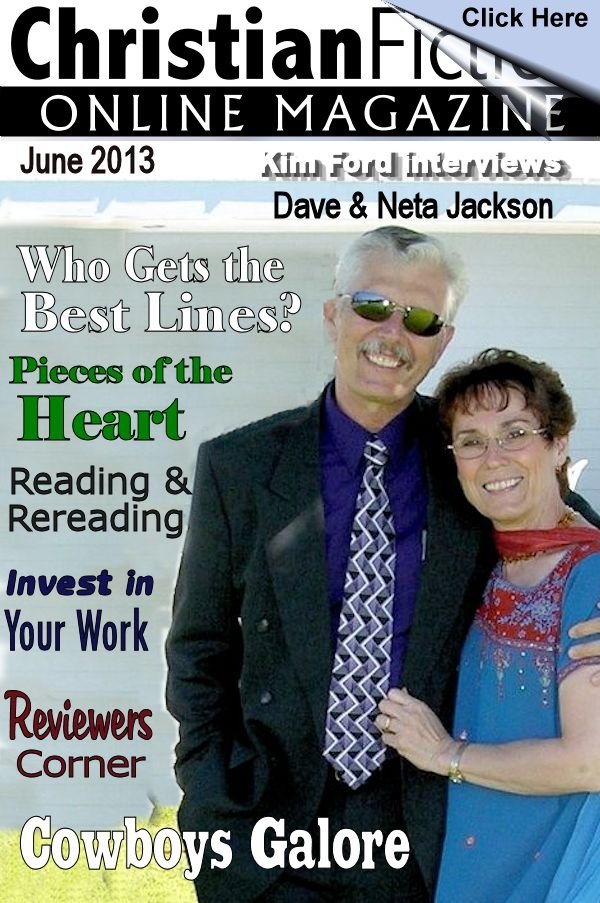
CFOM June 2013

Encouragement and help for novelists – Check out the June issue of Bonnie Calhoun’s Christian Fiction Online Magazine. There is no charge to subscribe to this excellent resource that each month features 35+ columns by the best and brightest authors, publishers, and agents in Christian fiction. 

Bonnie’s “Publisher’s Choice” this month is yours truly with an article that highlights the opportunities for novelists at this year’s conference. From Dr. Ted Baehr’s “Breakthrough Scriptwriting” and Tim Shoemaker’s “Take Your Fiction to the Gym” continuing sessions, two clinics, and numerous workshops this year’s GPCWC offers more than ever for both beginning and advanced novelists.

Scholarships – GPCWC is offering two 50% off scholarships to readers of Christian Fiction Online Magazine. But scholarships are not limited to CFOM readers. If you need scholarship help, you’ll find the application at http://philadelphia.writehisanswer.com/Scholarships.

Teens Write – You’ve heard the question: How do you eat an elephant? One bite at a time! This year’s Teens Write answers a similar question: How do you write a novel/article, devotion, screenplay? One Word at a Time! Pam Halter has done a fantastic job putting together an exciting program taught by nine authors and editors for teens ages 12-18. For more info on the Thursday, August 1, all-day Teens Write click here Please ask Father if there is a teen He wants you to encourage to come and to mentor.

Let Freedom Ring” in our Churches– Important thoughts from Mike Huckabee in a five-minute video. I’ve chosen never to seek tax exempt status because I don’t want to be muzzled from speaking or writing His answer. And although I pack both the Greater Philly and Colorado Christian Writers Conferences with an outstanding faculty and tons of learning and networking opportunities, I will continue to offer special sessions that are not about the craft of writing or of selling/marketing/promoting our work but that instead focus on the critical issues of our day. If you’re coming to the GPCWC, please prayerfully consider tithing your conference time by attending one of the following two-hour Thursday specials or order the CD.

Prepare for Persecution with C. Hope Flinchbaugh
A Culture in Peril with Rick Marschall
Compassion, Justice, Advocacy with Steven Lawson

Father, I feel such a sense of urgency to “write Your answer” NOW, while the doors to print and distribute Christian literature and take full advantage of the Internet are still open. Help us not to hide our light under a bushel but to effectively and faithfully write what You’re calling us to write whether fiction or nonfiction, stories or articles, poetry or screenplays. Use each one of us, Father, to make a difference in the lives of our readers.

You’re here to be light, bringing out the God-colors in the world.
God is not a secret to be kept. We’re going public with this,
as public as a city on a hill.
If I make you light-bearers, you don’t think I’m going to hide you
under a bucket, do you?
I’m putting you on a light stand.
Now that I’ve put you there on a hilltop, on a light stand—shine!

Matthew 5:14-15 MSG


Read Full Post »

1.       To learn the craft of writing. Okay, maybe you’ve been writing for many years, but there is always more to learn. Master craftsmen will teach workshops and continuing sessions that, as one conferee said, are the equivalent of a semester college course in writing.  You’ll learn from authors like Bill Myers whose books and videos have sold over 8 million copies or Gayle Roper, an award-winning author of 45 books. And they are just two of the 55 authors, editors, agents, and publicists serving on this year’s faculty.

 2.       To learn the craft of marketing your work to potential publishers. If you’ve gotten more than your share of rejection slips or have yet to get your first rejection (I’m sorry, it goes with the territory of being a writer), CCWC’s track of six hour-long publishing workshops will provide practical help. In addition, Cindy Lambert is teaching a two-hour Wednesday early bird workshop on “Crafting a Winning Nonfiction Book Proposal.”  You also can choose Tim Shoemaker’s continuing session, “How to Get Published!” or Kim Bangs’ continuing session, “Nonfiction Books.”

3.       Face-to-face opportunities to pitch your work to editors and agentsAt CCWC you get FOUR 15-minute one-on-one appointments with the faculty of your choice. Because we have such a large faculty, there’s still a good possibility that you’ll get your top choices. On Thursday afternoon you’ll have the opportunity to sign up for additional appointments with faculty who still have openings. In today’s publishing world, the only way to connect with many agents and editors is through meeting them at a conference. Check out our helpful spreadsheets of their editorial needs. Our authors are also available for appointments. They can point out the strengths and weaknesses in your writing, answer questions, and provide helpful guidance.

4.       To learn the craft of marketing/promoting your published work. And yes, it’s a craft, and not one that comes naturally to most writers.  I’ve often said that the reason I quit Girl Scouts is because of the stress of trying to sell cookies.  Whether or not you like marketing, the fact is that you hold the key to the sales of your book.  But the good news is that it’s a craft that can be learned. Thomas Umstaddt’s continuing session, “Obscure No More,” will teach you how to build a powerful online platform. We’ve also got a track of six hour-long marketing workshops.

5.       Friendships with other writers. My closest friends are writers I’ve met at writers’ conferences. In amazing ways writers connect deeply with one another more quickly than I ever have in the chit-chat before and after Sunday morning worship services. And we need each other. A key verse for me that I’ve experienced and sought to follow is 1 Thessalonians 5:11, “Encourage each other to build each other up” (TLB).

 6.       Inspiration and encouragement to keep on keeping on. Our general sessions and keynotes will challenge you not to give up. I’m especially looking forward to the closing keynote Saturday afternoon, “Finishing Strong,” that Tim Shoemaker has stepped in to give because Tim Baker had to cancel.

 “Often we can feel less and less equipped to cope with the battles of life,” Tim Shoemaker says. “Job problems. Medical issues. Financial concerns. Emotional wounds. All of these and more can make us feel like we’re past our prime. Whether it is feelings of fear, inadequacy, or feeling the best of life has passed us by, we can easily fall into a sense that we’re sidelined and that God doesn’t really have anything critical for us to do. We can get relaxed. Complacent. It is a surrender of sorts.  A neutralizing thing.

“First Corinthians 16:13-14 says ‘Be on your guard; stand firm in the faith; be men of courage; be strong. Do everything in love.’ These are great verses for many Christians today – men or women. I’d like to break down those verses a bit. And I’d like to encourage the people not to give up. Not to quit. Not to let down their guard. But instead, to finish strong. To keep fighting. To be an example to the next generation. To fight for the loved ones in the next generation. We do that through who we are, and as writers, we influence people through the words we put on paper.

“I’d like to recruit people to active duty to be in the fight – to be the person they should be and the example they should be. Some of the greatest works God does through people is not when they have money, influence, strength, or power. It is when those things are gone or greatly diminished from where they once were that God often uses a person.”

7.       Direction from the Lord. Each year, and this is my 17th year directing CCWC, God meets us on the mountain and changes lives. He has a plan for you and for your writing.  He is the One who makes the impossible possible.

So there are seven reasons you need to prayerfully consider coming to the May 15-18 Colorado Christian Writers Conference. I could easily list many more! Partial scholarships are still available if you need financial help to come that your family, friends, or church are unable to provide.

There’s still time to register and to request appointments. Housing is still available on the YMCA’s campus, and the YMCA will do roommate matching to lower the cost. None of the workshops or continuing sessions are filled because of the YMCA’s large classrooms. And there’s even still space in two of our clinics – the “Speakers’ Clinic” with KPOF’s Roy Hanschke and “Get Them Coming to Your Blog/Website” with Megan Breedlove whose website has held one of the top two spots in Google search terms for more than three years.

You’re welcome to contact me if you have questions at mbagnull@aol.com or 484-991-8581.

God bless you and your writing – Marlene


Read Full Post »

Grumbling face cropped


When I am weak,
then I am strong—
the less I have,
the more I depend on him.

2 Corinthians 12:10

Suddenly everything seemed to be getting in the way of my writing. Other things, good things, were demanding time and energy. I didn’t see how I could say no. When I walked past my office and felt a twinge of guilt, I told myself my hectic schedule was only temporary. Besides, I couldn’t let people down when they were depending on me.


One day Anne Sirna, my writing mentor, helped me to see what was happening. “You’re running from the very thing you most want to do,” she said. “You’re running from your writing. Don’t you see?” she explained, when I looked puzzled. “New writing opportunities are stretching before you and, to put it bluntly, you’re scared. You’re protecting yourself from the possibility of failure by becoming so involved with other things that you have an excuse not to write.”

She’s right. I am afraid of failure, I admitted to myself. I don’t have confidence in my writing ability. And I have been saying yes to other things to avoid having to prove myself.

“It’s a cop-out to see yourself as a failure,” she continued, as if reading my thoughts. “You’ve served your apprenticeship. It’s time to move on—to make a commitment to being successful even though success is a lonely and risky thing.”

Everyone who is serious about writing will face similar turning points when the choice must be made—move ahead or turn back. Repeatedly, we will be forced to ask ourselves whether or not we are willing to risk failure, if doing God’s will is more important to us than the acceptance and approval of men.

It is not just beginning writers who feel anxious when starting a new project, or mailing a completed manuscript. Even established writers know their work may not be accepted. Success brings with it a heavier responsibility to produce quality work. Self-expectations, as well as the expectations of editors, become greater. At any moment a “crisis of confidence,” as Anne calls it, can occur.

It can be triggered by many things. We may feel trapped in an interminably long period of writers’ block. An editor may require a rewrite of something we felt was our very best work. A manuscript we were sure would be accepted may be returned. It may even be a manuscript we wrote on assignment. I remember when that happened to me. I was devastated! Besides the blow to my ego, I felt I had let the editor down. He expected me to produce something he could use.

I had reached one of those turning points. I could choose to play it safe and turn down future assignments. I could accept them (and even seek them) despite my feelings of inadequacy. Or, I could give up and quit.

I remember flipping through the pages of my Bible. Colossians 1:29 leaped out: “This is my work, and I can do it only because Christ’s mighty energy is at work within me.”

Knowing that Paul wrote those words from prison made them even more meaningful to me. I imagined how the Evil One must have used that time to try to persuade Paul to question his call. Surely he did not miss the opportunity to remind Paul of past failures, as well as the times of hardship and hostility. Paul’s spirit had absorbed rebuffs and criticism, even from fellow Christians. His body carried the scars of beatings and lashings.

“Is it worth it?” Satan must have whispered more than once. “If God really called you to be a missionary, then why is he allowing you to rot here in prison?”

But Paul chose to remain true to his call to spread the Good News by writing letters that might otherwise not have been written. “What has happened to me has really served to advance the gospel,” he wrote (Phil. 12 NIV).

But Paul met the Lord on the Damascus Road, I thought to myself. He knew Jesus more intimately than I do.

Yes, I could argue that Paul had a greater measure of faith because of these experiences. Yet he also knew what it meant to go from tremendous spiritual highs to deep lows and to be plagued with a thorn in his flesh. If, as some commentators suggest, Paul had epilepsy or an eye disease, it must have caused him to wrestle with doubts. How could he preach if he might have a seizure, or write if he could not see?

God did not remove the thorn. Instead, he told Paul, “I am with you; that is all you need. My power shows up best in weak people” (2 Cor. 12:9). Paul chose to rely on this promise and to affirm: “When I am weak, then I am strong—the less I have, the more I depend on him” (2 Cor. 12:10).

The cure for a crisis of confidence is to re-examine in what, or more importantly, in whom, we have placed our confidence. “I know the one in whom I trust,” Paul wrote to Timothy (2 Tim. 1:12). That’s the key. It’s not self-confidence, but God-confidence!

“Stir into flame the strength and boldness that is in you,” Paul counseled Timothy (2 Tim. 1:6). Does that mean he expected Timothy never to be afraid? No! “I came to you in weakness—timid and trembling,” Paul admitted to the Christians in Corinth (1 Cor. 2:3). And he didn’t go to Corinth until his second missionary journey!

“Stand steady, and don’t be afraid of suffering for the Lord,” Paul encouraged Timothy. “Bring others to Christ. Leave nothing undone that you ought to do” (2 Tim. 4:5). The NIV reads, “discharge all the duties of your ministry.”

If a crisis of confidence is holding you back from the work you know you have been called to do, it’s time to acknowledge that it’s not self-confidence you need but God-confidence. It’s time to learn what it means “to be a living demonstration of Christ’s power, instead of showing off [your] own power and abilities” (2 Cor. 12:9). And instead of running from opportunities to serve the Lord, you need to continue to focus your life and your ministry on the “firm, tested, precious Cornerstone that is safe to build on. He who believes need never run away again” (Isa. 28:16).

Responding to God’s Call to Write

Fear of failure, rejection, writer’s block, or not measuring up, can all create a paralyzing crisis of confidence. Read and reflect on the following antidotes to fear, noting beside each reference how God is personally speaking to you.

Psalm 9:10

Psalm 16:8

Psalm 25:3

Psalm 34:4

Isaiah 41:10

Philippians 1:6

1 John 4:18

Unless otherwise noted Scripture is from The Living Bible.

Read Full Post »

I knew God had called me to write a book. What I didn’t know was if I could do it. As my friend, Gayle Roper, once said, “There’s a big difference between a book and a magazine article – like 250 pages difference.”

To be honest, there were days the last thing I wanted to do was work on the book. The evil one’s lies grew louder and more insistent. “What makes you think anyone would want to read what you’ve written?” My self-doubts intensified. I wanted to run from what I still knew God was calling me to do.

“He who believes need never run away again,” I read in Isaiah 28:16 (TLB).

Exactly 365 days after I had committed to finish the book in a year, I completed the manuscript. And then the waiting began. Some of you know that the manuscript was rejected by 42 publishers over a five year period. Finally, the 43rd editor to see the manuscript accepted it for publication.

Looking back I’m amazed that I didn’t give up. I certainly wanted to give up. But God wouldn’t let me, and I’m so glad I didn’t. Had I given up, eight other books would never have been published. I wouldn’t have known the joy of serving on the faculty of over 70 Christian writers’ conferences and giving my one and two day writing seminars over 50 times around the nation. The Greater Philly Christian Writers Conference would not have been birthed 30 years ago, and the awesome privilege of directing the Colorado Christian Writers Conference for 17 years would never have happened.

What about you? Is God calling you to write an article or story, a book or even a screenplay? Does it seem impossible? Do you feel you lack the writing skills to make it happen? Are you stuck and the words aren’t flowing? Do you have a completed manuscript that you’ve not been able to sell? Are you discouraged and ready to run from God’s call?

I know the Colorado or Greater Philly Christian Writers Conference can be a turning point for you and your writing ministry. It’s not too late to register for the May 15-18 Colorado conference and to schedule one-on-one appointments with FOUR editors, agents, or authors if you attend Thursday through Saturday. Secure online registration for the July 31 – August 3 Greater Philly conference will open April 15.

Trust Father to make a way –

  • Logistically – Friends babysat my three children so I could attend the St. Davids Christian Writers Conference for a number of years.
  • Financially – We often “have not because we ask not.” I want to encourage you to approach your church family and your friends if you need help. They may welcome the opportunity to invest in your writing ministry. My pastor paid for my first writers conference and provided the accountability I needed afterwards to not waste what he invested in me. The conferences do not have any full scholarships to offer this year, but partial scholarships up to 50% of the cost of registration are possible. The scholarship application is not yet posted for the Philly conference. For Colorado’s application click here. Time payments can be arranged if necessary.

Lord, I believe. Please help my unbelief. Help me to have faith in You knowing that You can make all things possible.

Read Full Post »

Dina SleimanDonna Brennan
Interviews
CCWC & GPCW
Faculty Member
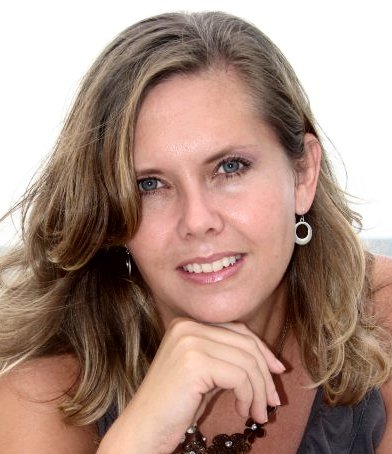
Dina Sleiman

Author Dina Sleiman writes with the same flowing grace one could find in a song or a dance. If you’ve read her books, you wouldn’t be surprised to learn that she’s also a poet, a songwriter, and a worship dance choreographer, director, and dancer. Her novels, poetry, songs, and dancing all can be considered forms of worship.

Dina will be teaching a continuing session at the May 15 – 18 Colorado Christian Writers Conference on “The Inspiration and the Perspiration.” This course is designed to help Christian writers seek God for writing inspiration and also learn the skills needed to craft that inspiration into a fully publishable book. I got in touch with Dina to ask her a few questions about the session.

Q: How would you define Christian writing? Is being a “Christian writer” different from being a “Christian who writes”?

I have my own definition for Christian writing: “Any writing inspired by the Holy Spirit that advances the kingdom of God on earth.” I will explain why that is my definition, and we will discuss other definitions and examples of classic Christian writing as well. This is always an interesting topic, and I love to hear feedback from my students. I do think being a Christian writer can be different than being a Christian who writes, although that is a fairly subjective distinction.

Q: As a Christian I feel I should already know how to hear from God, but I admit sometimes I only hear silence. Will you be showing us methods for communicating with God so we can hear his voice? Will these methods help us only with our writing or with other issues in our lives as well?

I think every Christian wants to believe they can hear God’s voice, but the majority of us suffer a good bit of confusion in this area. This was a huge struggle for me throughout much of my life. A wonderful Christian brother told me recently that he tossed a coin to try to discern God’s voice. That’s just sad. We have the Holy Spirit dwelling in us and should not have to resort to those sorts of Old Testament methods. Although I do not buy into overly simplified formulas, I have learned a number of techniques during my own quest that really help me to hone in on and hear God’s voice, and yes, I will be sharing all of these. In class we will be focusing on how to use these techniques for writing, but they will absolutely bless you in every area of your life. I remember one student receiving a powerful word from God during our in class prayer time that had nothing to do with writing at all, and it truly changed her.

Q: How can we tell if our inspiration comes from God or from or own imagination?

Again, I have a number of tips to share in this area, including checks and balances. But the most basic answer is that the Spirit of God is often referred to as a flowing river, so you want to tap into that sense of flow that comes from the kingdom of God deep within you.

Q: So once we get that inspiration—that lump of clay—now what?

Now the real work starts. LOL. Even the biblical writers spent extensive time crafting their writing into the best of ancient poetry. We’ll look at examples of how this worked with a number of poets and prophets.

Q: If our inspiration comes from God, that’s all we need, right? Why would we need to learn the writing craft—wouldn’t God just give us all the words, too?

I won’t deny that it is possible for God to give us precise words that are correct the first time, or to teach us to write through practice and adherence to his voice, but this is the rare exception rather than the rule, even among biblical writers. Habakkuk is the only real example of this. Of course, the deeper we can tap into the flow of the Holy Spirit, the better our writing will be the first time. But that is no excuse to be lazy or stubborn about revising and editing.

Q: Will the class be more about inspiration and hearing from God, or more about the perspiration and crafting we need to do to shape that lump of clay idea into a publishable book?

We will spend the first few hours learning about inspiration and transitioning to perspiration. The remainder of the class will be about the hard work needed to create that publishable book and all the steps of editing involved. I’ve actually considered calling the class “The Inspiration, The Perspiration, and The Commercialization” but I didn’t know how that would strike people. We will spend the last hour or so discussing the business side of writing, though, because it’s very important if you want anyone to read the message you’ve put so much work into.

Q: What are some of the crafting topics you’ll cover?

We will look at all the steps of editing that publishing houses use and learn to apply these to our own work. I will try to tailor the class to the genres of writing represented in the group. But in general we will look at a plan to start with major content editing and work through the process until every letter and punctuation mark is in place. Generally I end up teaching about plot, scene structure, and characterization for fiction and essay structure for nonfiction. Sometimes I get to teach a little about poetry and lyric essay as well, depending on my audience. Fortunately, my background covers all of these areas. I think my class is a great one for new writers who want to see the full process involved in writing a book, and also for writers who are having difficulties, but can’t seem to pinpoint why.

Q: Would strategic planning include outlines and plot summaries? What about for folks who call themselves pantsters?

By strategic planning, I primarily mean that you should pin down your genre, audience, and premise before you get too far into your writing. And I will explain why these are important. Beyond that, I believe that the writing process works differently for different writers. In basic nonfiction, it would be difficult to write without a plan. In fiction and narrative nonfiction, some writers plan the whole plot in advance. Some must experience the entire story along with their characters without much forethought. Many writers fall somewhere in between, using free writing to get them started before planning. But in order to have a strong story, at some point you must examine the structure. Every story must have the same basic “bones” as Angela Hunt puts it. And we will discuss those bones. For pantsters, this might mean extra editing once the first draft is finished.

Q: As acquisitions editor for WhiteFire Publishing, you’ll be taking appointments at both the May 15-18 Colorado and July 31-Augut 3 Greater Philly Christian Writers Conference. Is there any advice you care to share with folks planning to pitch to you?

I just want to get to know you as a person. What you write of course, but also your personality, passions, hopes, and dreams. I love a relaxed session with a lot of give and take. Don’t worry about preparing a long speech. A thirty second pitch is more than enough. And please, please, listen when I ask you questions—and answer them! Don’t just return to your script. You don’t have to sell me on anything. I just want to see if we’re a match. I rarely read sample writing during an appointment. I prefer to do that later via email. But I do appreciate if the author gives me a one sheet with their picture to help me remember them and our conversation.
_______ 
 

Thanks Dina and Donna. Great questions and responses. “The Inspiration and the Perspiration” is going to be an exciting continuing session.

Read Full Post »

Kaylie Hathaway

Interview with Teen Author
Kaylie Hathaway

by
Megan Breedlove

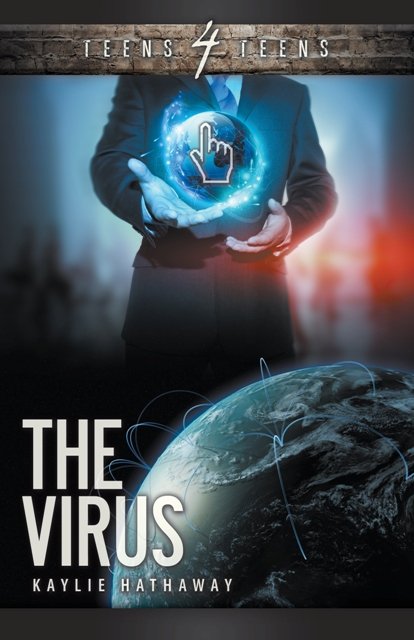
Kaylie Hathaway is the 16-year-old author of Beautiful Disorder and The Virus. She began attending the CCWC in 2011, where she received the Most Promising Teen award. In 2012 at the CCWC, OakTara acquired her books, and they were recently published. They are available through Kaylie’s website at KaylieHathaway.com.


BeautifulDisorderThe VirusOak2In this interview, Kaylie discusses her writing career and offers some advice to other aspiring writers.

Q: Tell us when you started writing and how you came to publish two books at only 16 years old.

I started writing when I was around 10 years old because I read a Nancy Drew book, and it really inspired me to want to become an author. So I started writing, and then you told me about the conference, and I was able to go. I had a 15-minute appointment with an editor, and that editor read the first chapter of my novel and told me I should talk with Ramona from OakTara Publishing. I did, and Ramona liked my writing, and the rest is history.

Q: What is unique about your books?

I think that they take a different perspective being written by a teen, for teens. They really express how teens feel, because I am a teen right now. But they also make a good point without being preachy.

Q: I’ve read your first book, and your characters are pretty realistic. How do you make them so believable?

I just try to think about what they would do in certain situations. I give them personalities, and I let them become like people that I know in certain ways, and unlike people that I know in other ways. And I give them their own distinct personalities in that sense.

Q: How do you know what to include in your stories?

For the first draft, I just write whatever comes to my mind, whether it’s good or bad, or whether it makes sense or doesn’t make sense, whether it goes along with the story or not. Then for the second draft, I go through and take out everything that just doesn’t work. I have to cut out a whole lot of stuff most of the time. Sometimes none of it works, but you just have to keep cutting it out and adding new stuff in to make it all flow right.

Q: What is your goal in writing?

One reason I write is to tell people stories and to encourage people, especially teen girls, that they can follow their dreams. Another reason is I also want them to know that reading can be fun and beneficial. My main reason is to point everyone I possibly can to Jesus Christ. My goal is to honor God with my writing.

Q: What advice would you give to someone who wonders whether he or she has what it takes to be a writer?

I would say to get out there and meet people, make contacts, and just keep writing. Never stop writing. Ever. Always read, too. Read and write.

Q: What do you think is the best way to learn your craft as a fiction writer?

To read. To read all the time, and to listen to all the advice that other authors give. Even if the advice maybe doesn’t apply to your genre, you still want to listen to it and take it all in and apply it the best you can.

Q: Do you want to pursue writing as a full-time career?

I want to go into the editing world at some point in time. But no matter what I’m doing, I’ll still be writing. I don’t think I’ll ever stop writing books.
_____________

Kaylie is already registered for the May 15-18 Colorado Christian Writers Conference. She’ll be part of our author’s panel at the Thursday evening general session, “Write His Answer – And Give God the Glory!” She’ll also serve on the “Working with Editors” panel during Saturday’s Teens Write. I’m very proud of Kaylie and was delighted to give her book the following endorsement:

Kaylie Hathaway takes readers into the life of a teenage girl who has been convicted of a crime she did not commit. Sentenced to community service, Lux Richardson struggles with anger and unforgiveness. Beautiful Disorder is a page-turning novel for teens written by a teen. ~ Marlene Bagnull, CCWC Director

Read Full Post »

More great questions from Donna Brennan and thoughtful answers from Gayle Roper. Thank you both!

Q: Getting published can seem like an impossible dream for so many of us. Even if we’ve been published before, that doesn’t guarantee we’ll get published again. Do you have any advice for those of us just starting out or hitting a roadblock?

Getting published has always been a challenge and staying published is just as bad. With today’s economy and its effects on the publishing industry, things are definitely dicey for new writers. On one hand publishers always want new, strong talent. One the other, the slots for this new talent are very limited. Certainly writing the best story ever is crucial but not a guarantee of publication. Self-publishing and e-publishing are options, but they are no guarantee of readers. Also such books are rarely picked up by traditional publishers unless they sell huge numbers. But since true writers can’t not write, we soldier on, honing our craft and attending writers conferences like Colorado CWC where we meet and talk face to face with agents and editors and freelancers, all of whom want to help the new writer achieve her dream.


Q: How important a role should faith or Scripture play in our books? How can we add a strong faith element without sounding like a Sunday sermon?

For many of us as Christians, writing an overt faith message is one of the reasons we write. But we can never forget that every story can only contain the weight of one major spiritual truth, and it’s not always the telling of the Gospel. And that’s okay. It’s the body of a writer’s work that shows the full picture of her faith. It’s in trying to stuff in too much that doesn’t really fit this particular story that we get the sermon-y feeling that always makes our shoulders itch as we read it. My feeling is that less is usually more. Writing spiritual content happens or should happen in much the same way writing touchy topics happens—through the hearts and mouths of the characters.


Q: I’m sure you enjoy writing, or you wouldn’t have written so many fiction and nonfiction books. But does it ever seem easy? Did writing certain books hold special challenges for you?

I do not find writing easy. Getting every word down on the page is work for me. But I love rewriting. That’s the fun part. There I get to enrich my characters, beef up the plot, choose better words, add humor—all the fun parts of making a book. So I agonize through the writing so I can get to the rewriting. And there’s nothing else I want to do in spite of the blood, sweat, toil, and tears. (Told you I was reading a WW II book.)


Q: Do you remember the first story you ever sold? What encouraged you to write it? What encouraged you to submit it?

The first thing I sold was a short story based on what had happened at the junior high where I had taught. I sold it to Young Ambassador, a long defunct teen magazine, for $10. I think I wrote it as a young mom at home with a baby because I was bored and wanted something to occupy my mind. I figured I’d submit it because why write it if no one read it?


Q: More and more these days, publishers expect authors to be involved in promoting their own books. But many of us have a strong aversion to self-promotion. Do you have any advice to offer for those who struggle in this area?

Self-promotion isn’t quite the big deal for novelists it is for non-fiction writers. I suggest picking a social network you’re comfortable with and establishing yourself there. Don’t promote yourself as much as become a person. Every so often you can mention writing and writing-related things, but mention what you did today, what stupid thing you or your kids said, where you went—things like this. Also look at your life and find a couple of things that are interesting, something that may not even be related to your novel, things an interviewer might find interesting (they tend to think novelists are bad interviews because they can’t talk about anything but the book—so not true). For example I’ve used my kids’ adoption and my one son’s meeting with his biological family. I also suggest that you come up with ten questions (and answers) about your book that a host could use to conduct an interview. That way you can talk about the theme of your book or the spiritual truth or the hard issue and all the knowledge you have beyond what fit in the book. Think about it ahead of time, but don’t worry about it. And don’t ask established writers to endorse your work before you have a contract and a manuscript.

I hope all this helps, and I look forward to meeting many of you in Colorado in a few months!

Gayle will be teaching a continuing session on “Fiction for Women.” Since women are the biggest readers of story, Fiction for Women means any kind of fiction out there. We’ll talk about the mechanics of fiction: character, plot, setting, theme – all the usual stuff. We’ll also talk about what makes story resonate with readers, how to build that emotional tension, and what makes women buy into a story world so she never quite forgets your work.

Read Full Post »

Procrastination is a sin;
it brings me endless sorrow.
I know I should stop doing it.
I think I’ll start tomorrow!

No doubt you’ve seen this poem or something similar. I checked the Internet to attribute it and found 4,390 entries! Obviously procrastination is a hot topic that, like the old game of hot potato, we quickly toss (pass the blame) to someone or something else. Really, isn’t it easier to blame someone else for causing us to procrastinate or to move to another task to avoid doing the thing(s) we know we need to do?

While no one is immune from procrastination, I think writers are especially prone. I’m not pointing an accusing finger at you – I’m pointing it at myself. Despite the chapter on “Overcoming Procrastination” that I wrote for my book, Write His Answer – A Bible Study for Christian Writers, I struggle with procrastination as much or perhaps more than others. How else could I have written that chapter? I’m an expert! If you’re curious about what I’m learning (but sadly not always applying), click here to read the chapter online.

I especially struggle with procrastination when it comes to planning the Colorado and Greater Philly Christian Writers Conferences. I know Father has entrusted these conferences to me. Watching Him work and do Ephesians 3:20 things each year (it’s now 31 years for Philly and 17 for Colorado) is one of my greatest joys. It’s just the getting started that’s hard. Well, okay, the entire process is hard! I know I’ll face computer challenges and overwhelming to-do lists and time pressures that will stretch me far beyond my abilities, my limited IQ (it’s amazing how stupid my computer can make me feel), my wisdom, my strength . . .

And that’s the problem! I procrastinate when I focus on me – on my self-doubts and feelings of inadequacy rather than trusting the Lord to enable me to do what I can never do on my own. Although the world says dependency on anyone or anything but ourselves is weakness, like the apostle Paul I’d rather embrace my weaknesses knowing that “when I am weak, then I am strong – the less I have, the more I depend on him” (2 Cor. 12:10 TLB). God-confidence is far better than self-confidence!

Will you ask the Lord what He wants you to do – to write – this year? And will you then commit to do it in His strength and for His glory?

P.S. The website for the May 14-17 Colorado Christian Writers Conference  is now updated with the 2014 faculty and continuing sessions. Lots more info coming soon. The website for the July 30-August 2 Greater Philly Christian Writers Conference still has 2013 info but I can tell you that Cec Muphey will be on faculty. I hope you’ll visit again, pass the URL on to friends, and save the date! There’s still lots of work to do but as Aristotle said, “Well begun is half done.” I’m excited and hope you will be too.

Read Full Post »

« Newer Posts - Older Posts »